
BEHIND THE CURTAIN
勘玉钏
2017.5.12-6.18
K11 Art Foundation, Palazzo Pisani - Conservatorio di Musica
‘You want it darker. We kill the flame.’ ——Leonard Cohen
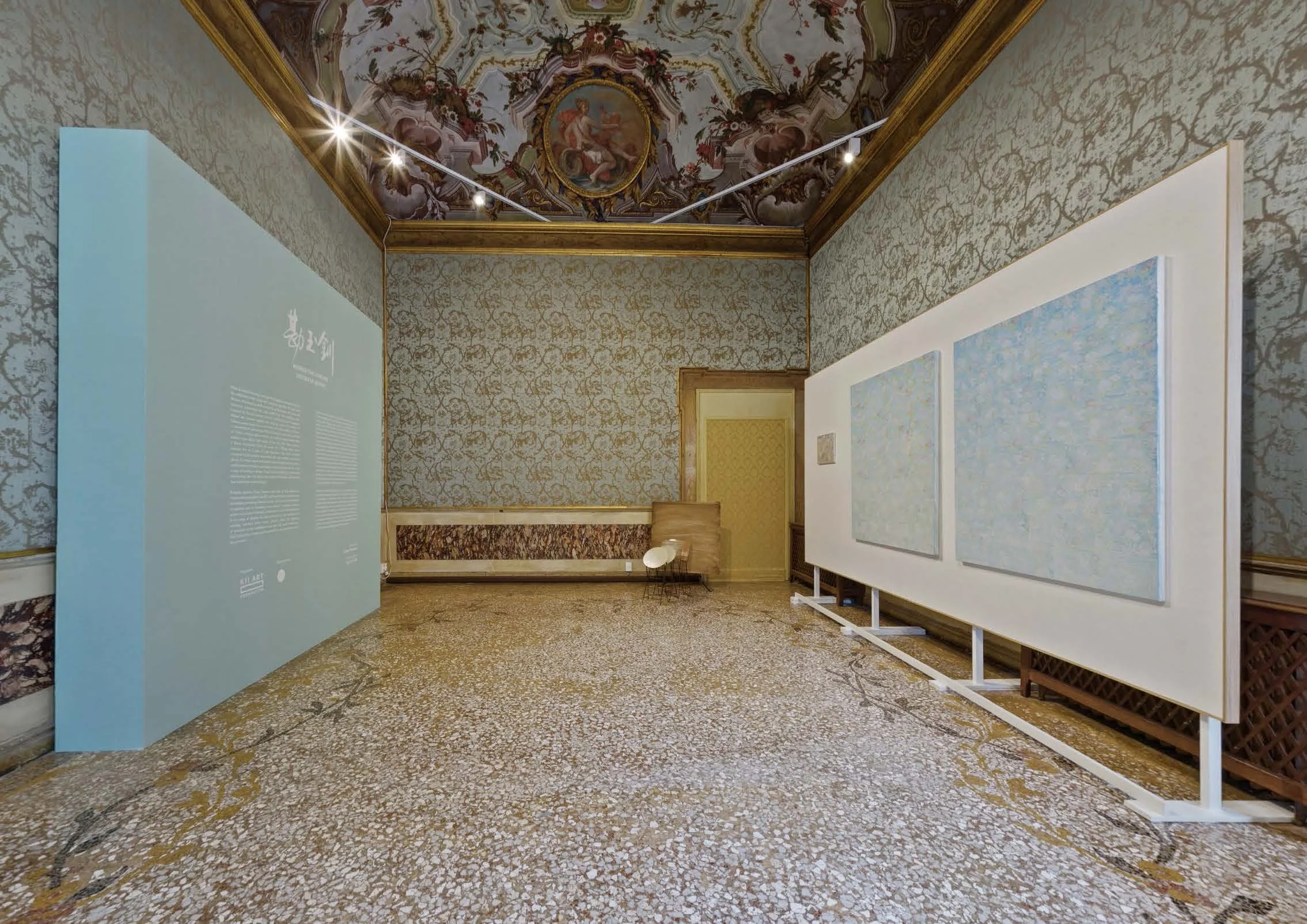
What is behind the stage curtain? The English and Italian titles of the exhibition both imply this essential question. In opera and theatre, this hanging cloth reveals the performance of actors and actresses, separating the real world from the imaginary one. Behind the Curtain unveils the secret and intimate nature of Liang Yuanwei’s work. It is also a tribute to Venice, to the mythical opera house Teatro La Fenice, and to the Carnival of Venice, during which crowds of revellers hiding behind their masks roam alleys and canals of the city. The Chinese title is a direct borrowing from the name of a Peking opera whose intrigue lies in a pair of jade bracelets. The story naturally recurred in the artist’s mind when she was working on her new pieces. It evokes themes of duplicity, love, justice, and betrayal; it is also a paradigm, a representation of the world, a way of looking at things. Peking opera is performed on a bare stage with minimal but highly symbolic props: a table and two chairs----objects that are similarly found in Liang’s installation work Early Spring ------are used to reconfigure multiple scenes and add layers of meaning to the staged acts, This same paradigm exists in traditional Chinese paintings: the subjects remain, but the techniques differ.
In the early 2000s, Liang became known for works bearing the mark of conceptual art of the 1960s, but she eventually reinvented her practice. umustbestrong (2004-2006) is a pivotal piece in her oeuvre that exemplifies her approach to art making. A sort of self-persuasive mantra, the sculpture-poem foretells a practice penetrated by feelings, combing conceptual rigour with an expression of intimacy. In Liang’s art, everything becomes a matter of reminiscence and feelings. When a work takes shape, it manifests a lived moment, a fleeting memory, or a diffusing influence, sometimes inexplicable. It is then a work of exploration----- a way back to the origin----of technique, history, and perception. A process of intense soul searching, Liang’s painting on the canvas develops into an opportunity for her to refocus on the feelings that constitute the nature of human beings.
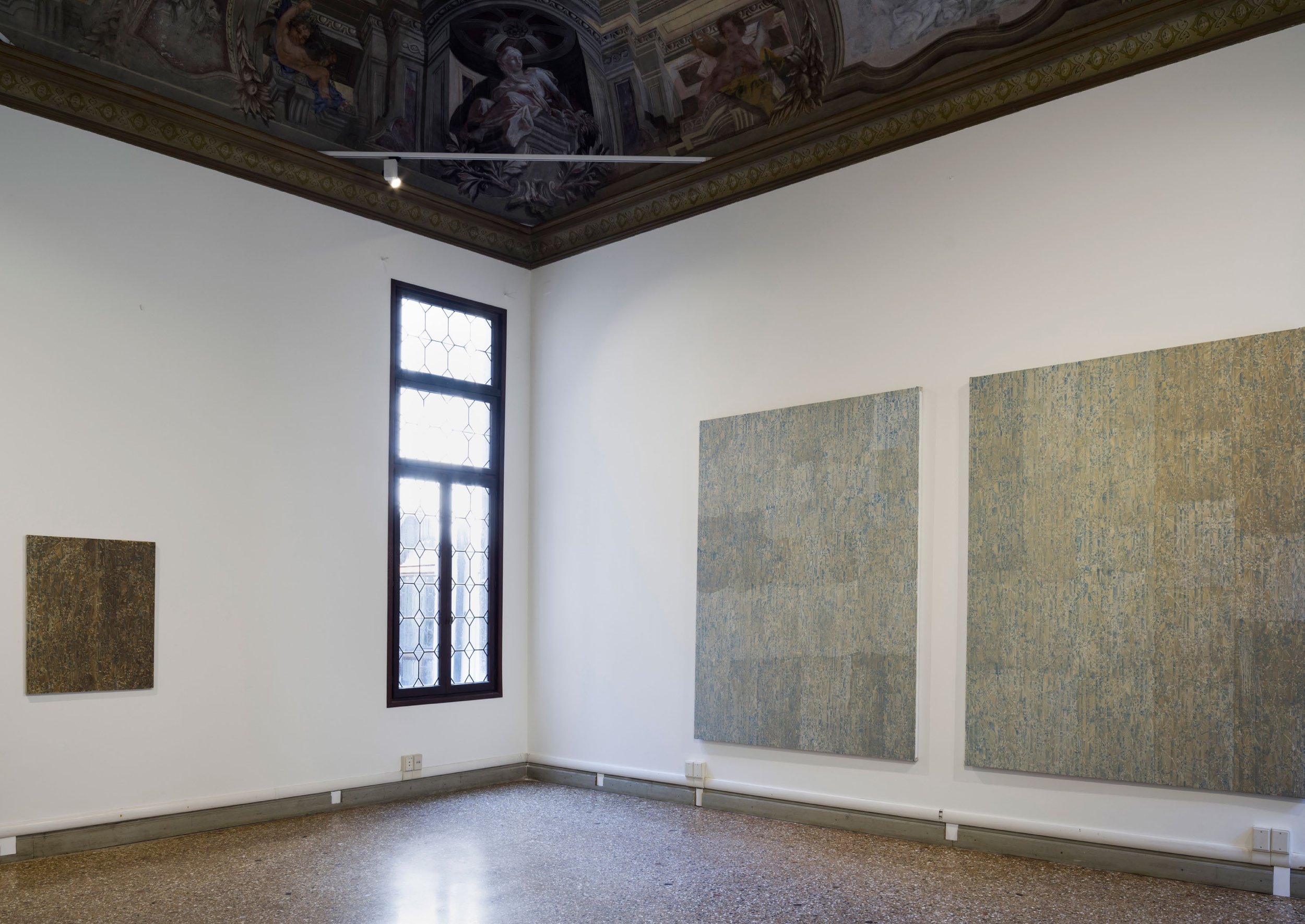
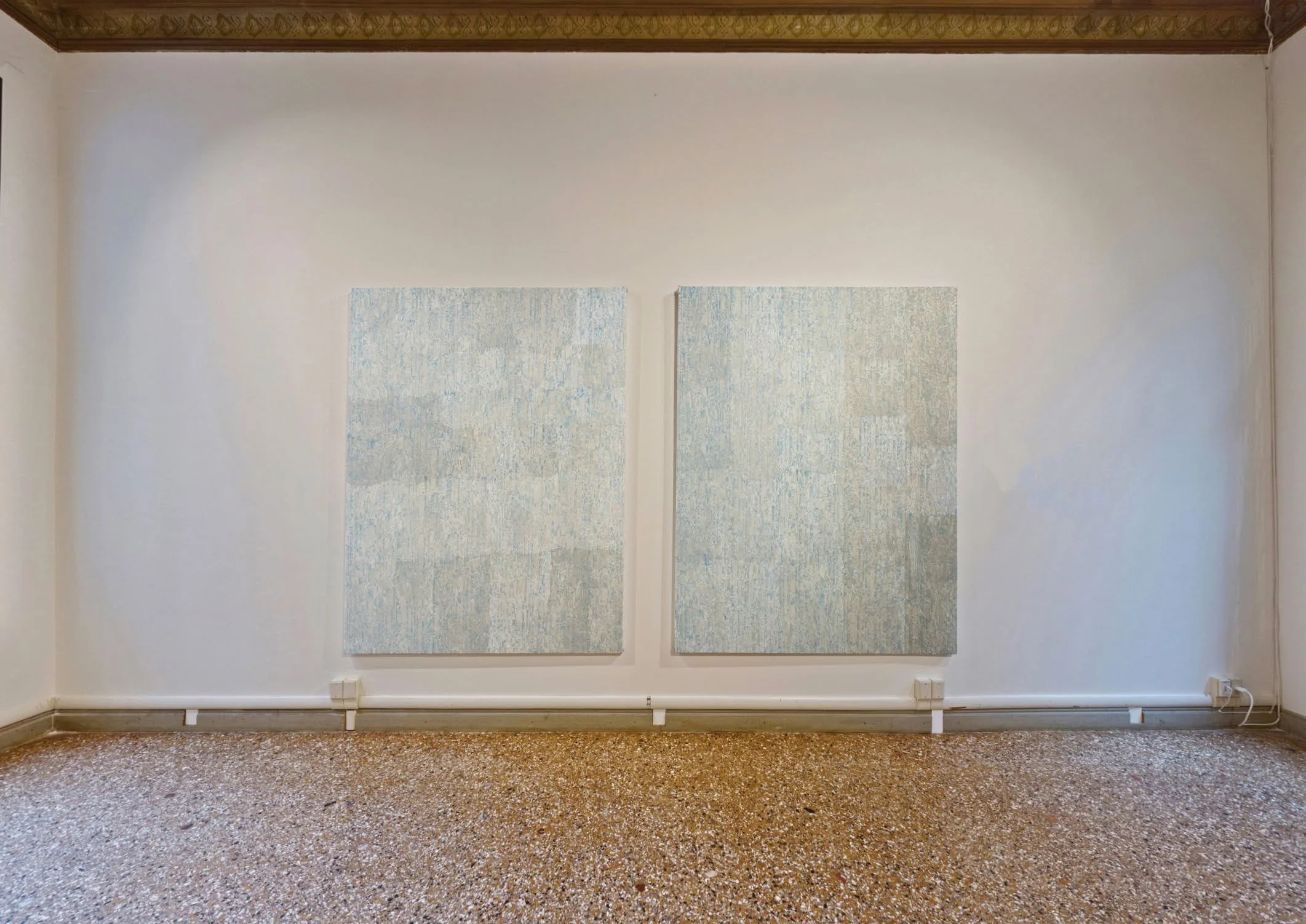
Her series of paintings from 2015(2015 no.1 to 2016 no.16) is significant to this introspection. Recollecting her childhood memory of a dress, which was then rendered as a motif in the series, she associated its shape, when creased, with its texture and sound. The evoking of mixed sensations of an object that has already disappeared can be seen as a peculiar sort of synesthesia, although it is not a neurological condition at all. Liang painted this specific object again and again, and it diminished on sixteen canvases in a process of digression and research on the scale. The act of painting allowed her to, at a personal level, reconstruct her memory and, of course, to materialise it. She stopped making further variation when the subject matter was exhausted and when she was fully satisfied. The 2015 series is thus marked by many personal, intimate touches; at the same time, it shows traces of the artist’s technical researches.
Liang has devoted herself to studying the technique of fresco---particularly the early Renaissance art (c.1420—1500)--- and traditional Chinese paintings---especially those of the Song(960—1279) and Yuan (1279—1368)dynasties. As the mind of Liang, the studio where she works is full of books and reference materials. Among canvases are books, some opened, showing details of famous paintings such as Leonardo Da Vinci’s Last Supper, Masaccio’s frescoes in the Brancacci Chapel, and Fra Angelico’s fresco in the San Marco Convent. Noli Me Tangere, alongside reproductions of landscape paintings by Qian Xuan and Wu Zhen from the Yuan Dynasty. The return to ancestral art, as in Liang’s practice, is born out of a need to better understand its evolution from the past to the present. The canvas has been transformed in both the repetitive system of the construction of space and in the gesture: it turns out to be more like a piece of writing or a code. The epigraph of this text---an excerpt from one of Leonard Cohen’s latest songs ‘You Want It Darker’-----reflects, in part, this change. These are words that live in Liang’s newest Paintings created in 2017. The pattern becomes darker and wider, further exploring the depths of the human soul.
The oeuvre of Liang, with abundant references drawn from different sources, questions the systems of repetition and reproducibility through a motif of her choice. It is primarily concerned with humanity, with the fundamentals that constitute it: impressions, perceptions, and feelings.
Loïc Le Gall
Curator of Behind the Curtain
“你若要更暗,我们便熄灭火种。”1
-莱昂纳德·科恩 (Leonard Cohen)
舞台幕布背后是何许光景?本次展览的英文和意大利文题目都暗示着这个重要问题。在歌剧与戏剧中,这块悬挂的幕布拉开,演员的表演开场,现实世界与想想世界一分为二。“勘玉钏”揭示了梁远苇作品中隐秘与私密的特质,同时也致敬了威尼斯以及传奇的凤凰剧院,和每年吸引无数狂欢人群至此的威尼斯狂欢节 - 人们躲在面具后面,在这座城市穿河过巷地游荡。中文题目直接借用了一出京剧的巨幕。艺术家在创作新作时,这个围绕一对玉钏展开的阴谋故事自然而然地浮现在她脑海里。故事主题涉及欺骗、爱、公正和背叛;同时也是一个范式,一种对世界的表征和观看事物的方式。京剧舞台鲜有复杂布景,所用道具极为简约,但具有高度象征意味:一桌两凳 - 梁远苇早期的装置作品《早春图》也借鉴了这一范式 - 变幻出各种场景,为演员的表演赋予多层意义。同样关于范式的使用也存在于中国绘画的传统中:主题不变,但技法不同。
2000年代初,梁远苇以其富有1960年代观念艺术特质的作品而为人所熟知,但她后来改变了实践方向。装置《umustbestrong》(2004-2006)便是其全部作品中极为关键的一件,最能代表她的艺术创作取向。这首如同某种自我说服的咒语的“雕塑-诗”预示了一种被情感浸透的实践,观念的严谨与表达的私密在其中合为一体,在梁远苇的艺术里,一切均变成追忆与情感的问题。作品成形之际,得到彰显的是生活中的某个时刻,某段转瞬即逝的回忆、活着某种弥散的体悟,有时难以言喻。同时,这种创作的过程也是一种探索,一种对古典技法、历史和认知本源的回溯。作为一个深入反思的过程,梁远苇的布上绘画使她得以重新专注于那些构成任性的基本情感。
梁远苇从2015年开始创作的系列绘画(2015.No.1至2015.No.16)对于上述反思非常重要。她以自己童年记忆中的纱裙作为这个系列的主题,画面带给人的感知体验中混合了摩挲纱裙时产生的褶皱形状以及触感和声音。某一已消失的物件所引发的多种感知体验的混合可视作一种特殊的通感形式,但这完全不是从神经学的意义上来讲的。而梁远苇所反复描摹的那一特定的物件,随着这十六幅画所做的变形和尺寸实验,也渐渐消失了。绘画的行为使她得以在个人层面上重建记忆,当然同时也为该记忆赋予了物质形状。直到主题被穷尽,自己也完全满意,她才会停止创作变体。因为,2015年的这个系列里既有大量个人、私密的特质;也包含了艺术家技法研究的痕迹。
梁远苇一直潜心研究湿壁画 - 尤其是文艺复兴早期艺术(1420-1500年) - 以及传统中国画 - 特别是宋(960-1279年)元(1279-1368年)年间作品 - 的技法。她的工作室就像她思维世界一样,满是各种典籍和参考资料。画布之间散放着书本,摊开的树叶上可以看到许多名画的细节,包括达芬奇的《最后的晚餐》、马萨乔在布兰卡契小堂的壁画、安杰利科修饰在圣马可修道院的壁画《Noli Me Tangere》,以及元朝钱选及吴镇的山水画副本。在梁远苇的实践中,回归古代艺术是处于更好地理解从古到今演变过程的需要。画布在空间构成与姿态两者的重复系统里被转换成某种更加类似于文字或编码的东西。本文开头引用的文本 - 莱昂纳德·科恩遗作“You Want It Darker”的歌词 - 从部分意义上反映了这一变化。这些文字栖息于梁远苇2017年的新作当中。图案变得更暗更宽,在探索人类灵魂的深度上更进一步。
梁远苇的作品富含对不同资源的参照指涉,通过艺术家自己选取的主题,对重复与可复制性的体系提出质疑。它首先是关于人性的、关于构成人性的基本要素:印象、认知与情感。
——————————————
1 引文为翻译,莱昂纳德·科恩,<You Want It Darker>,收录在专辑<You Want It Darker>,Columbia,2016。原文为:”You want it darker, We kill the flame.”
Loïc Le Gall
“勘玉钏”策展人
LINKS 相关链接
In Conversation with Liang Yuanwei